
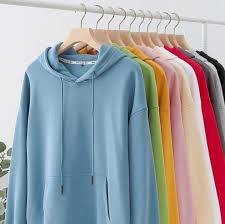
TL;DR: Hoodies were invented in the 1930s, became culturally visible in the 1970s, reached broad mainstream popularity in the 1990s, and became a universal wardrobe staple in the 2000s and 2010s. Champion designed the first hooded sweatshirt for laborers in upstate New York around 1930. Today, the garment sits inside a global hoodies and sweatshirt market reaching an estimated $224.77 billion in 2025.
The short answer: popularity came in waves
There is not one clean year for this. Hoodie history makes more sense if you separate invention from subcultural visibility, then separate that from mainstream retail adoption and later luxury normalization.
The 4-Stage Hoodie Timeline:
- Stage 1: Invention (1930s) – Practical cold-weather gear for laborers and bench athletes.
- Stage 2: Visibility (1970s) – New York hip-hop culture, California skateboarders, and mainstream film characters made the garment publicly legible.
- Stage 3: Mainstream (1990s) – Mall retail brands, college apparel licensing, and music video styling turned it into ordinary casualwear.
- Stage 4: Luxury (2010s-2020s) – High-end design houses and the global athleisure market removed most of the remaining formality around it.
If the question is who invented it, the 1930s apply. If the question is when hoodies were broadly sold and broadly worn across different demographics, the 1990s are still the most accurate answer.
Before fashion got involved, the hoodie was practical gear
Hooded garments existed long before the sweatshirt version. Medieval Europe had monks in hooded tunics called “cowls” and laborers in hooded capes called “chaperons”. That background is real, but it can also blur the point. The modern hooded sweatshirt starts in the 1930s as workwear and athletic apparel.
In 1919, the Feinbloom brothers started the Knickerbocker Knitting Mills in Rochester, New York. By 1922, brothers Bill and Abe Feinbloom changed the name to Champion Knitwear Mills, Inc., incorporating the company in 1924. Around 1930, Champion sewed the first hood onto a French Terry cotton sweatshirt. The addition was meant to protect laborers working in cold storage warehouses and tree surgeons dealing with freezing upstate New York winters.
Champion expanded its athletic presence in 1934 by supplying double-thickness hoodies to University of Michigan football players, who needed warm garments on the sidelines. The company then patented its “reverse-weave” knitting method in 1938. Once “reverse-weave” shows up, you are not really talking about vague costume history anymore. You are in garment construction: fabric grain turned to reduce vertical shrinkage, side panels added so industrial washing machines would not pull the shape out of the sweatshirt, and a piece originally built for cold warehouses becoming standardized apparel almost by accident.
Table: Early hoodie users by context
| Demographic | Decade Adopted | Primary Use Case |
|---|---|---|
| Warehouse Laborers | 1930s | Protection in cold storage facilities |
| Tree Surgeons | 1930s | Weather protection during outdoor winter labor |
| Football Players | 1934 | Sideline warmth between plays |
| Military Personnel | 1940s | Training exercises and physical education |
The 1970s made the hoodie visible in public culture
By the 1970s, the hoodie had moved beyond the warehouse and the sideline. In New York City’s Bronx borough, emerging hip-hop culture adopted the garmen. It worked for breakdancing because it allowed unrestricted movement, and it worked for graffiti artists because the hood offered anonymity on streets and subway cars.
On the West Coast, youth folded the same garment into skate culture. After the closure of many commercial skate parks in California during this period, skaters gravitated toward hardcore punk scenes and kept durable hooded sweatshirts in the mix as part of an anti-establishment uniform.
Mainstream visibility arrived with the 1976 release of the film Rocky [Source: URL not captured]. Sylvester Stallone wore a grey cotton hoodie in the training montages on the streets of Philadelphia. That image tied the garment to discipline and self-determination for a mass audience.
The grey cotton version really stuck.
The 1990s are likely the strongest answer for “became popular”
If you need one decade and do not want to overcomplicate it, use the 1990s. That is when the hoodie stopped reading as a signal from one scene and started reading as normal clothing. During this decade, the physical term “hoodie” became standard vocabulary, and the garment moved from niche subcultures into mass retail production.
Hip-hop fashion drove a lot of that shift. The 1993 release of the album Enter the Wu-Tang (36 Chambers) put a gritty hoodie image into wide circulation. Black-owned streetwear brands like Cross Colours, Karl Kani, and FUBU turned that momentum into product and scale. FUBU grossed $350 million in its early years of business, and that matters less as a bragging-rights number than as evidence that urban style was moving into department stores. At the same time, the Gap sold its classic arched-logo hoodie in saturated colors as easy, low-maintenance casualwear, Kurt Cobain helped make the relaxed grunge version feel unforced, and Tommy Hilfiger and Ralph Lauren brought hooded sweatshirts into their own collections. What changed in the 1990s was not just that more people wore hoodies, but that the same basic garment could move from Enter the Wu-Tang (36 Chambers) to a Gap wall to a Tommy Hilfiger or Ralph Lauren rack and still read as normal, which is not a graceful sentence but it is a better description of mass adoption than the cleaner summaries people usually give.
I still think the arched-logo Gap hoodie tells you more about mainstream adoption than most later luxury examples, even though that probably understates what hip-hop changed first. Mass popularity usually looks a little boring when it arrives.
Table: 1970s Visibility vs 1990s Mainstreaming
| Era | Primary Wearers | Cultural Function | Retail Availability |
|---|---|---|---|
| 1970s | Skaters, graffiti artists, athletes | Subcultural identity, anonymity | Specialty sports stores, army surplus |
| 1990s | Students, suburban youth, musicians | Everyday casualwear, brand display | Mall chains, department stores, boutiques |
Popular with whom? The answer changes by group
Depends on the group
- Workers and Athletes: Adopted hoodies in the 1930s and 1940s strictly for thermal protection and bench warmth.
- Youth Subcultures: Adopted them in the 1970s for unrestricted physical movement, anonymity, and counter-culture identification.
- Students and Mainstream Consumers: Embraced them in the 1990s as university-branded apparel and mall brands saturated the market.
- Luxury Consumers: Accepted the hoodie in the 2010s when high-fashion designers began treating fleece as a premium runway material.
Comfort, anonymity, branding: why the hoodie spread
Comfort is the obvious answer, but it is not the whole answer. The hoodie lasted because it solved practical problems and gave people a clean surface for logos at the same time.
Dropped shoulder seams, originally designed by Champion to fit easily over football shoulder pads, created a relaxed silhouette that consumers found comfortable. The front “kangaroo” muff pocket added simple utility: hand warmth, quick storage, one place to do something with your hands.
By 2025, consumer preferences had shifted heavily toward exaggerated comfort, with high demand for oversized fits featuring wide bodies and long sleeves. A February 2025 market analysis estimated the global hoodies and sweatshirt market at $224.77 billion. Another industry report from March 2026 put the sector on a 5.28% compound annual growth rate. Surveys from 2025 also noted that over 70% of millennial and Generation Z consumers own at least three hoodies. That is what permanent relevance looks like in apparel, even if the exact styling keeps changing.
3 Drivers of Hoodie Adoption:
- Physical Architecture: The kangaroo pocket and dropped shoulders provide high utility and unrestricted movement.
- Graphic Canvas: The large chest area lets universities, mall brands, and streetwear labels display high-visibility logos.
- Psychological Comfort matters too. The garment acts as a physical shield, offering wearers a sense of privacy and safety in public spaces.
The hoodie’s popularity came with backlash
As the hoodie spread, institutions often treated the hood itself as suspicious. Schools frequently banned the garment from dress codes, arguing that it concealed identity and let students hide headphones or test answers. In 2005, the Bluewater Shopping Centre in Kent, UK, initiated a strict “Hoodie Ban,” prohibiting visitors from wearing the item on the premise.
The most severe controversy came in 2012, when 17-year-old Trayvon Martin was fatally shot by George Zimmerman in Florida. Martin was wearing a hoodie, which Zimmerman cited as suspicious during a 911 call. The killing pushed the garment into a national debate about racial profiling and surveillance.
In the 2015 academic paper The Hoodie as Sign, Screen, Expectation, and Force, Dr. Mimi Thi Nguyen analyzed how racial optics are used to justify violence, using Martin’s case as a foundation. Protesters organized the “Million Hoodie March” in New York. Thirteen members of the Miami Heat NBA team posed in black hoodies with their heads bowed in solidarity. Activists later launched campaigns like #Humanizemyhoodie, led by professor Jason Sole, to combat the stigma associated with men of color wearing hooded sweatshirts.
Luxury fashion and athleisure made the hoodie fully mainstream
Luxury did not invent the hoodie, but it did remove the last bit of formality anxiety around it. In 2017, Vetements head designer Demna Gvasalia released an oversized hoodie featuring the Titanic movie poster, which gained heavy media attention when worn by singer Céline Dion. Brands like Fear of God, led by Jerry Lorenzo, built entire collections around premium fleece and consistent oversized sizing blocks for high-end streetwear.
By 2026, dressing down became an accepted norm in nearly all professional and social environments. High-end houses like Balenciaga normalized pairing heavy cotton hoodies with formal trousers. The global apparel market reached an estimated $1.84 trillion in 2025, heavily supported by casualization.
Data from April 2026 places North America as the dominant market for hooded sweatshirts, holding nearly 40% of global revenue in the category. The African market emerged as the fastest-growing region, projected to grow at an 11.35% rate according to 2026 market intelligence.
The most accurate conclusion readers can cite
If a reader wants one version to quote, use the layered one: invented in the 1930s, popularized culturally in the 1970s, and mainstreamed in the 1990s. Champion created the modern hooded sweatshirt for laborers and athletes. Decades later, skaters and hip-hop artists gave the garment its rebel identity. Mall brands and sportswear companies made it a global retail staple. Today, it remains a major piece of modern apparel, supporting a global market valued at $224.77 billion in 2025.
FAQ
1. When were hoodies invented?
The modern hooded sweatshirt was invented in the 1930s by the Knickerbocker Knitting Company, which later became Champion. The company sewed hoods onto heavy cotton sweatshirts to protect laborers working in cold storage warehouses and tree surgeons working outdoors in upstate New York.
2. Were hoodies popular in the 1980s or 1990s?
They had subcultural traction in the 1970s and 1980s through hip-hop and skate communities, but the 1990s are when they became broadly popular. Gap, Tommy Hilfiger, college apparel, and similar retail channels made the garment standard casualwear across age groups.
3. Did hip-hop make hoodies popular?
Yes, though not by itself. Early 1970s hip-hop culture in the Bronx adopted the hoodie because it allowed unrestricted movement for breakdancing and anonymity for graffiti artists, and in the 1990s the Wu-Tang Clan and brands like FUBU helped push that aesthetic into national retail markets.
4. Why were hoodies controversial?
Hoodies drew institutional suspicion because the hood could obscure a person’s face. Schools frequently banned them to keep students from hiding their identities or contraband. The garment became central to a national debate on racial profiling in 2012 after the fatal shooting of 17-year-old Trayvon Martin in Florida.
5. When did hoodies become mainstream fashion?
If by mainstream fashion you mean ordinary retail fashion, the 1990s are still the clearest answer. That was the decade when mall brands, university apparel, and music-driven styling made the hoodie a default item instead of a niche one. The 2010s mattered too, but more as a status shift than an adoption shift: Vetements and Fear of God turned premium hoodies into luxury products after a lot of the broader work had already been done by Gap, Tommy Hilfiger, Ralph Lauren, and years of mass casualization. Luxury validation matters if you are tracking runway acceptance. It matters less if you are tracking what people were already wearing every day.
6. Who first wore hoodies: workers, athletes, or teenagers?
Workers wore them first. Champion designed the original hoodies around 1930 for warehouse laborers and tree surgeons, University of Michigan athletes were wearing them by 1934, and teenagers came later.