
TL;DR
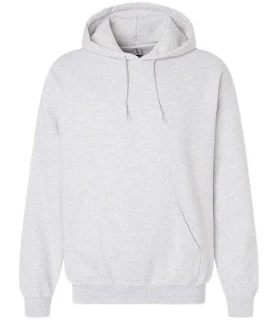
400+ GSM is the fabric weight where a hoodie stops behaving like a sweatshirt and starts behaving like a piece of outerwear. Below it, fleece drapes on the body. Above it, fleece holds its own shape. The shift came out of post-2018 streetwear chasing a garment-as-armor look, and it pulled the industry baseline well past the old 280 GSM standard most mall brands used to spec.
The 400 GSM Threshold: What the Number Actually Tells You
GSM means grams per square meter. It’s the standardized measure of fabric mass per unit area, and for hoodies, 400 GSM is roughly where fleece becomes structurally heavyweight.
Engineers measure GSM against standards like ASTM D3776. American mills often still quote in ounces per square yard, which is annoying if you’re sourcing from both Asia and the US in the same week. The conversion is fixed: 1 oz/yd² equals 33.906 GSM. So a 14 oz/yd² American fleece lands around 475 GSM. Keep that number in your head. You’ll need it every time a sales rep quotes you in the wrong unit.
Through the 2010s, mall-brand hoodies sat around 250 to 280 GSM. That weight insulates. It doesn’t structure. By early 2026, the baseline that any serious streetwear brand will spec has crept significantly higher, and most sourcing guides now bracket recommendations by silhouette intent.
| Classification | GSM Range | Imperial Equivalent | Typical Use Case & Drape |
|---|---|---|---|
| Lightweight | Under 250 GSM | < 7.5 oz/yd² | Summer layering, gym cover-ups. Clings to the torso. |
| Midweight | 280–350 GSM | 8.2–10.3 oz/yd² | Standard retail basics. Flexible, easy to layer under jackets. |
| Heavyweight | 380–480 GSM | 11.2–14.1 oz/yd² | Premium streetwear. Boxy silhouettes, stiff hoods, armor-like drape. |
| Super-Heavy | 500+ GSM | > 14.7 oz/yd² | Archival pieces and extreme winter wear. Restricts mobility slightly. |
At 400 GSM you get specific mechanical behaviors. Cotton yarns packed that densely resist wind on their own, no membrane needed. The hood stands up behind the neck instead of collapsing flat against the shoulders. That standing hood is most of what people are paying for when they pay a premium, even if they couldn’t tell you that.
How Streetwear Crossed the Weight Threshold (2018–2024)
The shift from midweight loungewear to heavyweight outerwear started around 2018. Jerry Lorenzo launched Fear of God Essentials to deliver the proportions of luxury fashion at a reachable price. The pitch solved a specific consumer problem: people wanted the exaggerated drop-shoulder silhouettes coming off the runway, but they were not going to pay $800 for a hooded sweatshirt.
What Essentials actually changed was the expectation of fit. The r/streetwearstartup threads from 2020 are full of people arguing over whether early Essentials drops were genuinely 400+ GSM or just cut so wide they read as heavy. Doesn’t really matter. The perception set the benchmark either way, and a hoodie stopped being an under-layer.
Independent wholesale blank manufacturers saw it immediately. Brands like Rue Porter built traction offering 465 GSM blanks to small graphic-printing labels, which let startup founders skip the overseas MOQ headache and still ship something thick.
By 2024 the “luxury basic” thing had hardened into its own segment. Consumers walked away from 280 GSM blended hoodies. Cole Buxton, Represent — entire collections built around heavy, structured drape. Heavyweight cotton became visual shorthand for quality, which is annoying if you’ve been paying attention long enough to remember when 320 GSM was considered solid, but here we are. Fast fashion responded by faking the structure with synthetic stiffeners or, less often, just eating the higher material cost.
GSM Lies Without Knit Type — Loopback vs. Terry vs. Brushed Fleece
Two hoodies at the same GSM can feel like completely different garments. Knit construction does more for hand-feel and thermal behavior than the raw weight does. A 400 GSM French terry is not a 400 GSM brushed fleece. Not even close.
French terry is a loopback construction. The face is a smooth flat knit, the interior shows uncut raised loops of cotton yarn. René Bassett, who’s been pushing 480 GSM garments late in 2025, specs French terry specifically because those natural loops trap air. You get volume, you get thermal regulation, and the fabric doesn’t go spongy on you. It also breathes, which matters more than people think.
Brushed fleece starts as loopback and then gets dragged across mechanical wire brushes on the inside surface. The brushing tears the loops open and creates that soft fuzzy pile everyone associates with a cozy sweatshirt. Problem is, you’ve now broken the yarn. Broken yarn pills. Broken yarn sheds.
| Knit Type | Interior Texture | Breathability | Durability Profile |
|---|---|---|---|
| French Terry (Loopback) | Raised, uncut loops | High. Traps air but vents heat. | Excellent. Unbroken yarns resist pilling. |
| Brushed Fleece | Soft, broken fuzzy pile | Low. Retains body heat effectively. | Moderate. Broken fibers shed and pill over time. |
| Sherpa Fleece | Deep, synthetic pile | Very Low. Designed for extreme cold. | Variable. Prone to matting after washing. |
Premium brands are increasingly speccing unbrushed French terry for their 400+ heavyweight offerings. The raw loops give you a dry, clean hand that holds its texture through repeated washing. The density is coming from the sheer amount of cotton in the knit, not from fluffed-up broken fibers pretending to be density.
Cotton Quality at the Same Weight Is Not the Same Hoodie
Weight does not equal quality. A factory can hit 450 GSM using short-staple cotton spun on a budget rotor, and the resulting fabric will be rough, stiff, and dead inside a year of regular wear.
Spinning method matters enormously. Ring-spun cotton continuously twists and thins the fibers, aligning them into smooth, strong yarn. Open-end uses a rotor to spin fibers rapidly. It’s faster, it’s cheaper, and the yarn comes out bulkier and harsher. A 400 GSM hoodie in open-end yarn feels abrasive in a way you’ll notice on the second wear.
Staple length is the next variable. Short-staple cotton needs aggressive twisting just to hold itself together, which makes the yarn rigid. Extra-long staple cotton, the Pima and Egyptian stuff, can hold together at lower twist rates. Lower twist leaves more microscopic air pockets inside the yarn itself, which is part of why premium cotton feels different even before you account for knit construction.
Yarn count is the part most consumers never hear about. Mills grade thickness using a “singles” count where higher numbers mean finer yarn. A 32s singles is thinner than a 21s singles. You can hit 400 GSM by loosely knitting thick 21s, or by tightly knitting finer 32s. The tight-knit version has a smoother face, which screen prints cleaner.
The r/malefashionadvice threads on heavyweight 100% cotton are full of people complaining about the break-in period. They’re not wrong. A 450 GSM ring-spun cotton hoodie comes out of the bag feeling somewhere between rigid and unfinished, and it takes roughly six months of regular wear before the sizing breaks down and the garment starts draping the way the brand probably intended.
The Finishing Stage — Why Two Identical Specs Feel Different
Fabric weight moves between the knitting machine and the retail shelf. Dyeing and finishing physically change the cotton, and they change both the GSM and the drape of what you end up holding.
Two main approaches: piece dye and garment dye. Piece dyeing runs entire rolls of knitted fabric through dye baths before anybody cuts a pattern. Color consistency is excellent, MOQs are brutal, typically 500 to 1,000 meters per color. A piece-dyed hoodie looks flat and uniform. Clean.
Garment dyeing happens after the hoodie is fully assembled. PFD (“prepared for dye”) hoodies go into massive industrial machines loaded with pigment or reactive dye. Los Angeles Apparel does this with their HF10GD 14oz zip-up. The combination of heat, water, and physical agitation forces dye into the seams unevenly, which is the whole point. You get tonal variation along the stitching, slight crackle around the pocket bag, the vintage broken-in look.
Garment dyeing also shrinks the hell out of cotton. The loop structure of a knitted fleece is holding mechanical tension from the moment it came off the loom, and a boiling dye bath releases that tension all at once. Unfinished heavyweight fleece can shrink dramatically; the industry plans for 3% to 7% controlled shrinkage and engineers patterns oversized to compensate. If you’ve ever wondered why a garment-dyed blank fits weird in the shoulders out of the wash compared to a piece-dyed one of the same nominal size, this is why.
The consumer upside is dimensional stability. A heavyweight that’s already survived a 200-degree industrial dye bath isn’t going to shrink in your home laundry. It’s also softer than it would be otherwise, because the factory wash already broke down the initial stiffness.
The Diminishing Returns Above 500 GSM
There’s a consumer assumption that fabric weight scales linearly with quality. If 400 is good, 600 must be better. In practice, utility drops off a cliff past 500.
At 480 to 520 GSM a hoodie hits its practical density ceiling. AS Colour’s 5151 Made Hood runs a 14.7 oz French terry, which works out to about 498 GSM. Excellent durability, sharp boxy silhouette, holds structure for years. Push past that and you start trading wearability for spec sheet bragging rights.
Heavyweight cotton holds water. A 600 GSM hoodie soaked through becomes genuinely heavy, and a standard home dryer cannot pull moisture from that dense loopback interior in a single cycle. You’re looking at two cycles or extended flat-air drying just to avoid mildew at the cuffs.
Mobility is the other problem. Ultra-heavy fabric doesn’t articulate at the elbow or shoulder, so you get bunching under the arm whenever you reach for anything. Driving in one is uncomfortable. Layering becomes basically impossible — a 550 GSM hoodie does not go under a denim jacket or a tailored overcoat without strangling the arm.
For most people, 380 to 450 GSM is the sweet spot. You get the structural drape, you get the wind resistance, and you don’t feel like you’re wearing a weighted training vest.
How to Verify a Brand’s GSM Claim (And Spot the Fakes)
Marketing teams routinely label 300 GSM garments as “heavyweight” to justify the price tag. The fix is to ignore the marketing and weigh the fabric yourself.
Textile labs use circular punch cutters, but the math scales linearly for home testing. To verify:
- Cut a perfect 10 x 10 cm square from a hidden area of the garment, or use a sample swatch if the brand sent one.
- Confirm it’s exactly 100 square centimeters. A slightly crooked cut will throw your number off by 5%.
- Weigh it on a digital scale calibrated to grams. A jewelry scale or a decent coffee scale works.
- Multiply the gram weight by 100.
A swatch weighing 4.2 grams means the fabric is 420 GSM. Simple.
If you can’t cut the garment, you’re stuck with visual and tactile tells. A real 400+ GSM hoodie will not pool flat when you drop it on a table. It will hold ridges. The hood, as mentioned, should stand up around the neck on its own.
Check the ribbing at the cuffs and hem. Premium heavyweight construction pairs dense fleece with 2×2 elastane-reinforced ribbing because the trim has to match the bodyweight or it looks wrong. Thin, wavy 1×1 ribbing that stretches out the moment you pull on it is a strong signal the manufacturer cut costs on the trim, and if they cut costs on trim they almost certainly cut costs on the fleece. Hold the fabric up to a light too. A real 450 GSM loopback will block nearly all ambient light coming through.
What 400+ GSM Actually Costs to Make (And Why Retail Is $120+)
Once you understand the blank cost structure, the retail math stops looking like a ripoff. A $40 “heavyweight” hoodie on Amazon is almost always either a poly blend or open-end spun cotton. There is no other way to hit that price.
Real 14 oz (475 GSM) blanks need real material investment. Independent Trading Co’s IND420XD and AS Colour’s 5151 Made Hood sit at the premium end of wholesale blanks available to print-on-demand operators in 2026. Los Angeles Apparel lists their HF10GD 14oz garment-dye zip-up at $79.00 direct to consumer, which gives you a public anchor for what this stuff actually costs at retail when there’s no streetwear brand markup sitting on top.
| Production Stage | Estimated Cost Factor | Value Add |
|---|---|---|
| Raw Material | High | 100% ring-spun cotton requires more raw fiber than poly-blends. |
| Cut & Sew | Moderate | Heavyweight fabrics dull cutting blades faster and require heavy-duty needle setups. |
| Dye & Finish | High | Garment dyeing and enzyme washing add $3 to $7 per unit in processing costs. |
| Wholesale Blank | $35 – $50 | The price a startup brand pays per blank hoodie before decoration. |
| Retail Price | $120 – $250 | Factoring in standard 4x to 6x fashion markups for branding, marketing, and margin. |
When a streetwear label buys a $40 premium blank, runs a custom screen print, adds woven labels, and applies a standard 4x retail multiplier, the end price lands at $160 by basic arithmetic. Anyone paying $120+ for a 450 GSM hoodie is paying for the volume of high-grade cotton in the garment and the dye and finishing processes that make it wearable. The brand name is the smaller part of the bill than people think.
FAQ
What GSM is considered heavyweight for a hoodie?
Heavyweight starts around 380 GSM and runs up to 500. Standard midweight retail sits between 280 and 350. The 400 threshold is the point where fleece stops draping softly and starts holding a stiff, boxy structure on its own.
What GSM is the Essentials hoodie?
Fear of God doesn’t publish a spec. The vintage Reddit threads from 2020 spent a lot of time on this and the rough consensus from people in manufacturing, reverse-engineering retail pieces, was that the perceived weight of the early Essentials drops came mostly from the exaggerated oversized cut, not from extreme fabric weight. The actual fabric estimates hover somewhere around 350 to 380 GSM. Lorenzo was clearly prioritizing fit silhouette over raw density, which is a totally defensible call given the price point, but it’s the reason die-hards who pick one up expecting a 480 GSM French terry tank often feel let down.
Is a 500 GSM hoodie too heavy?
For most indoor environments, yes. At 500 GSM you can’t layer it under a jacket, arm mobility starts to suffer, and drying times after a wash get long.
How can you tell if a hoodie is heavyweight without a tag?
Check the hood and the ribbing.
Why are 400 GSM hoodies more expensive?
They use nearly double the raw cotton of a fast-fashion equivalent. Heavy ring-spun yarns are more expensive, the stitching needs heavier-duty needles, and post-production treatments like garment dyeing add real cost on the factory floor before the brand ever touches it.