
TL;DR
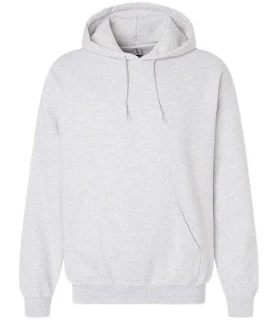
A hoodie is a type of sweatshirt with an attached hood and usually a front pocket. A plain sweatshirt, the crewneck, has neither. Hoodies typically use heavier fabric, cost more, and skew casual. Sweatshirts run lighter, layer better under jackets, and read more polished.
1. The One-Sentence Answer (And Why It’s Not That Simple)
A hoodie is a sweatshirt with a hood. A sweatshirt without a hood is a crewneck. In the industry these two words get thrown around interchangeably, and honestly that’s fine most of the time, because they share the same base DNA: soft pullover garments made from cotton or fleece blends. But treating them as identical siblings ignores structural differences that decide how they fit, feel, and function.
Every hoodie is a sweatshirt. Not every sweatshirt is a hoodie. That split runs all the way down to fabric density and retail price.
| Feature | Hoodie | Crewneck Sweatshirt |
|---|---|---|
| Hood | Yes (often with drawstrings) | No |
| Pockets | Usually (kangaroo or split) | Rarely |
| Typical Fit | Relaxed to oversized | Tailored to regular |
| Style Profile | Casual, streetwear, athletic | Polished, preppy, minimalist |
2. The Anatomy Breakdown
If you want to understand the difference, look at how the thing gets built. Both start with a tubular or side-seamed body, but the hoodie needs a lot more pattern pieces and assembly steps to get there.
The Neck and Hood
A standard crewneck finishes with a simple ribbed collar. A hoodie swaps that for a hood, and hood quality is all over the map. The Gildan 18500 runs a basic double-lined hood. The Carhartt K121 uses a three-piece hood for a more contoured fit over the head. Once you’ve handled both back to back you don’t really need convincing on which one someone spent more time drafting.
The Pockets
Crewnecks give you a clean, uninterrupted front panel. Pullover hoodies almost always carry a front kangaroo pocket. Zip-ups split that pocket down the middle.
Cuffs and Hem
Both garments lean on elasticity at the extremities to trap heat. The standard for both silhouettes, the Gildan Heavy Blend series being the obvious reference point, is 1×1 rib knit with spandex to hold shape recovery at the waist and wrists.
Sleeves
Crewnecks often use raglan sleeves, where the sleeve extends in one piece all the way to the collar, which helps shoulder movement and layering. Hoodies traditionally use set-in sleeves for a boxier, more structured shoulder.
3. Fabric Weight and Warmth — What the Numbers Actually Say
Hoodies are usually warmer than crewnecks. Heavier fabric, plus the head coverage. Ballpark, that’s 300–500 GSM on the hoodie side against 200–300 GSM for a lot of crewnecks.
Fabric weight gets measured in GSM (grams per square meter) or ounces per square yard. And here’s the thing people forget: GSM tells you weight, not warmth. A dense, tightly knit 300 GSM will out-insulate a loose, airy 350 every time, because the trapped air between fibers is doing more work than the raw gram count, but nobody puts knit density on a hangtag so we all just quote GSM and pretend it’s the whole story, which it isn’t, and I’ll die on this hill. Anyway, the rough tiers:
- Lightweight (180–250 GSM): basic crewnecks, summer athletic stuff.
- Midweight (280–350 GSM): the workhorse range for both. The Gildan 18000 and 18500 both land at 8 oz, roughly 271 GSM. The Carhartt K121 hoodie steps up to a denser 10.5 oz, about 356 GSM.
- Heavyweight (400–500 GSM): mostly premium streetwear hoodies chasing that stiff, boxy drape.
Now, does the hood itself make you warmer? For decades, cold-weather brands parroted a line that traces back to a 1950s U.S. Army field manual: you lose 40 to 45 percent of your body heat through your head. A 2008 study in the British Medical Journal by Dr. Rachel Vreeman and Dr. Aaron Carroll took that apart. The real figure is 7 to 10 percent, and it’s just proportional to how much skin your head represents relative to the rest of you. So a hoodie isn’t warmer because heads are magic radiators. It’s warmer because it physically covers more of you, the neck and ears included, and blocks convective loss there.
4. When Each One Actually Belongs (Context Guide)
Which one you reach for comes down to where you’re going.
- Office / Business Casual: crewneck, easily. r/malefashionadvice has been consistent on this into 2026: a plain crewneck over an Oxford collared shirt slots right into modern IT or hybrid dress codes. Hoodies read too casual for most corporate rooms, especially the loudly branded ones.
- Layering Under Jackets: a crewneck sits flat under a denim jacket, bomber, or peacoat. A hoodie forces you to pull the hood out over the outer collar, and you get bulk piling up behind your neck.
- Gym and Athletic Use: both work, different phases. Hoodie for the warm-up, when you want to trap heat fast. Crewneck as an active base layer, because there’s no hood bouncing around while you run or lift.
- Cold Outdoor Use: hoodie. Being able to throw the hood up against sudden wind or spitting rain turns it into functional outerwear instead of just a mid-layer.
5. Price and Durability — Why Hoodies Usually Cost More
Any brand selling both styles in the same fabric will charge more for the hoodie. Uniqlo UK, August 2026: the Sweat Oversized Pullover Hoodie at £34.90, the same material as an Oversized Sweatshirt crewneck at £29.90.
That £5 gap is just material and labor. A hoodie eats up to 30% more fabric for the hood and pocket, and then you’re adding hardware on top: grommets, drawstrings, sometimes a zipper. Every one of those is a part to source, a machine pass, a QC checkpoint.
Durability is a brand-construction story more than a hoodie-vs-crewneck story. Champion’s 12 oz Reverse Weave uses a cross-grain cut to fight the vertical shrinkage that wrecks cheaper sweatshirts in one wash, which is genuinely clever pattern engineering and the main reason those things survive a decade of laundry. Carhartt stretches the life of the K121 and K288 with triple-stitched main seams. Point being, weight buys you insulation, but construction is what buys you longevity, and those aren’t the same purchase.
6. The Style Semiotics Nobody Talks About
Past the specs, both carry cultural baggage.
The hoodie is welded to skate culture, tech startups, and high-end streetwear. Essentials and Supreme built entire empires on the 400-plus GSM heavyweight, turning it into a youth-culture uniform. The flip side of that is it can tip into sloppy fast, particularly when it’s plastered in branding.
The plain crewneck, meanwhile, has had a serious high-fashion comeback. Aimé Leon Dore put the crewneck front and center across their Spring/Summer 2025 and Fall 2026 Uniform deliveries. The Row and J.Crew both sell it as a “quiet luxury” staple. A grey or navy crewneck reads collegiate and clean, that 1990s thing a hoodie just can’t pull off.
7. Care, Longevity, and Common Failure Points
Both are low-maintenance. They just fail differently.
Hoodie Failure Points:
- Drawstring loss: they wrap around other clothes in the wash or yank clean out of the eyelets. Once one side’s gone you’re never re-threading it evenly and you know it.
- Pocket stretching: load the kangaroo pocket with a phone and keys and it sags.
- Hood deformation: high-heat drying warps the thick seams on a double-lined hood.
General care:
- Per r/femalefashionadvice, pilling on cotton-poly fleece is mostly friction and heat.
- Wash inside out to protect the soft fleece face.
- Cold water, 30°C, air dry. Heat is what breaks the spandex down in the cuffs.
8. How to Choose — A Decision Framework
Four questions:
- Wearing it to the office? Yes = crewneck. No = hoodie.
- Under a tailored jacket? Yes = crewneck. No = hoodie.
- Exposed to wind or rain? Yes = hoodie. No = crewneck.
- Always losing your keys or lip balm? Yes = hoodie, use the pocket. No = crewneck.
FAQ
1. Is a hoodie technically a sweatshirt?
Yes. A hoodie is a subtype of sweatshirt defined by the hood. Every hoodie is a sweatshirt; sweatshirts without hoods are crewnecks.
2. Which is warmer, a hoodie or a crewneck sweatshirt?
Hoodies, usually. They run heavier (roughly 300–500 GSM against 200–300 GSM) and the hood covers your neck and ears, which cuts convective heat loss. Just remember the extra warmth is about coverage and knit density, not because your head leaks heat faster than the rest of you. That’s the old Army-manual myth, and it’s been debunked since 2008.
3. Can I wear a hoodie to the office?
Generally no. Unless you’re somewhere with zero dress code, it reads too casual. A plain crewneck over a collared shirt is the safe business-casual move.
4. What is a sweatshirt without a hood called?
A crewneck sweatshirt. Round ribbed neckline instead of a hood, and usually no front pocket.
5. Why are hoodies more expensive than sweatshirts?
More fabric for the hood and pocket (up to 30% more), plus extra labor and hardware like grommets, drawstrings, and sometimes zippers.