
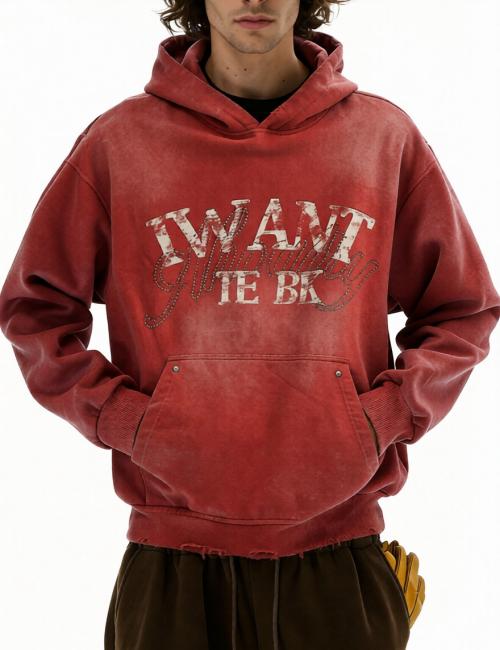
You know the feeling: you buy a hoodie for comfort, then it turns thin, faded, or misshapen after a few washes.
If you want a high-quality hoodie that holds up, start by judging fabric weight, yarn quality (like ring-spun cotton), and the construction details that take the stress of daily wear.
This guide shows you how to compare fleece and French terry, read gsm (grams per square meter) on a spec, and spot durable build choices like reinforced stitching, ribbed cuffs, solid hood construction, and metal zippers.
Then you will tie it all to fit and decoration, so screen printing or an embroidered logo still looks sharp months later.
Key Takeaways
- Start with the fiber and yarn: ring-spun or combed cotton feels smoother and tends to look cleaner under ink and embroidery. If you want easier care, a cotton-poly fabric blend (like 80/20) usually shrinks less than 100% cotton.
- Use GSM to compare fabric weight: French terry often lands around 240 to 320 gsm, midweight fleece commonly sits around 280 to 320 gsm, and heavyweight hoodies usually start above 350 gsm for more warmth and structure.
- Convert US weights fast: many blanks list ounces per square yard instead of gsm. A reliable rule is oz/yd² × 33.906 = gsm, so 10 oz/yd² is about 339 gsm.
- For decorating, ask one question: is the fleece 2-end or 3-end, and does it have a 100% cotton face? That combo can make screen prints and DTG look cleaner and reduce dye migration headaches.
- Inspect stress points, not the front graphic: look for double-needle seams, reinforced pocket openings, ribbed cuffs that snap back, a well-shaped hood, and a smooth-running metal zipper (many durable ones use a pull stamped with a known zipper maker).

Key Features of High-Quality Hoodies (Fabric Weight and GSM)
Quality shows up in the basics: fabric weight, how the textile was knitted, and whether the garment is built to resist twisting, shrinking, and pilling.
If you are buying for a team, a brand drop, or staff uniforms, you also want a hoodie that decorates predictably. That means a stable face for ink, plus seams and cuffs that do not buckle after washing.
- Check the tag or spec for gsm (grams per square meter): use it to compare lightweight hoodies, midweight hoodies, and heavyweight hoodies across brands.
- Look for a smooth outer face: ring-spun cotton or a cotton-face fleece typically gives cleaner screen printing and crisper embroidered edges.
- Confirm side seams: side-seamed bodies usually hold shape better than tubular knitting that can twist over time.
- Scan for reinforcement: double-needle seams, taped neck, and extra stitching around pockets and hood seams are the durability tells.
- Don’t ignore trims: ribbed cuffs and a quality zipper matter because they are high-movement failure points.
If you care about material safety claims, certifications can help you sort marketing from reality. For example, OEKO-TEX STANDARD 100 focuses on testing for harmful substances in textiles, while GOTS covers organic status through the supply chain and includes environmental and social criteria.
Cotton Options for Comfort
“100% cotton” on a label is not enough detail to predict hand-feel or long-term wear. You get a better read by focusing on how the yarn was made and how tight the knitting is.
Ring-spun cotton uses a twisting process that typically produces a smoother yarn with a softer feel. Combed cotton goes a step further by removing shorter fibers, which can reduce fuzz and help the surface look cleaner for printing.
Open-end cotton (often used in value basics) can still be durable, but it tends to feel coarser. A Cotton Incorporated technical bulletin notes that open-end yarn can test about 10% to 30% weaker than comparable ring-spun yarn, which is one reason premium hoodies often specify ring-spun.
- If you want the softest hand: combed, ring-spun cotton or a cotton-rich blend.
- If you want easier care: an 80/20 cotton-poly fabric blend is a common sweet spot for shrink control and durability.
- If you want stretch for active wear: look for a small amount of spandex or lycra in the body fabric, and pay extra attention to seam quality so the knit recovers without rippling.
- If you are decorating: prioritize a smooth face yarn and stable jersey knit or fleece so details stay crisp.
100% cotton hoodies can look and feel great, but they usually demand better laundry habits. Heat is the enemy, especially high-heat drying, because it accelerates shrinkage and can increase surface fuzz that turns into pills.
Pick ring-spun or combed cotton for softer, cleaner-looking hoodies that decorate well.
Fleece and French Terry Materials
Most hoodies you see are knitted, not woven, and that matters. Knits stretch and recover, which is why the details (yarn choice, knit density, and seam reinforcement) matter as much as raw fabric weight.
Brushed fleece feels plush because the inside is brushed to raise fibers for warmth. French terry keeps loops on the inside, so it usually feels cooler and breathes better.
If you are sourcing blanks for printing, pay attention to “2-end” versus “3-end” fleece. In a 2024 fleece guide, S&S Activewear explains that three-end fleece uses an extra tie yarn that helps separate the face from the backing, which can help keep polyester from creeping through a cotton face during decoration.

| Material | How it feels | Typical fabric weight cues | Best use |
|---|---|---|---|
| Brushed fleece | Warm, soft inside, higher loft | Often chosen above ~350 gsm for cold-weather structure | Heavyweight hoodies, workwear warmth, structured fits |
| Loopback fleece (unbrushed) | Less fluffy, more breathable, easier layering | Midweight ranges often overlap ~280 to 320 gsm | Year-round wear, less bulk under a jacket |
| French terry | Cooler, looped interior, smooth exterior | Commonly ~240 to 320 gsm, depending on density | Active wear, lightweight hoodies, spring and fall |
Decoration choices should follow the fabric. Fleece handles screen print, puff print, and embroidered designs well, especially on denser, smoother faces. French terry also takes embroidery nicely, but the looped interior can show through on very light colors if you use a heavy stitch count.
If you are building a performance hoodie, you might see synthetic material blends or bonded layers that list a total gsm (membrane plus face plus backing). Those can be great for weather resistance, but you should treat them like outerwear: prioritize seam strength, zipper quality, and hood construction over softness alone.
Construction Techniques for Hoodie Durability
A hoodie lasts because the seams hold, the knit stays stable, and the high-motion details do not collapse. That means you judge construction with your hands and eyes, not from a product photo.
If a supplier can share testing, you get a more objective view. For example, the ASTM D3512 random tumble pilling test reports results on a 1 to 5 scale where 5 means no pilling and 1 means very severe pilling, and AATCC TM 135 is a common method for measuring dimensional change after home laundering.
- Seams: look for double-needle stitching, clean topstitching, and no skipped stitches along shoulders, armholes, and side seams.
- Pockets: check for reinforced openings or bar-tack style stitches at the corners of the kangaroo pocket.
- Hood: a three-panel hood (with a center piece) usually sits rounder and less “pointy,” and a lined hood adds structure.
- Rib trims: ribbed cuffs and hems should feel dense and spring back. Many rib trims use a small amount of spandex for recovery.
- Zippers: a metal zipper is a durability upgrade on heavyweight hoodies, and a smooth glide matters more than shine.
Use of Double-Needle Stitching
Double-needle stitching uses two parallel rows, which spreads stress and helps keep a seam from popping or warping after repeated washing.
It also matters for decoration. A stable seam line helps heavy embroidery sit flatter because the fabric does not torque as much at the stitch line.
- Check shoulders and armholes: these are constant stress points, especially on heavier fabric weight fleece.
- Look inside the hoodie: clean seam allowances and consistent stitching usually signal better factory control.
- For custom orders: ask if the shop reinforces pocket openings and hood seams, not just the side seams.
Brands known for workwear durability often make this easy to spot. For example, Carhartt’s product details for certain heavyweight hoodies call out triple-stitched main seams and a three-piece jersey-lined hood, which are the kinds of build notes you want to see when durability is the priority.
Strong seams keep a hoodie working hard, wash after wash.
Importance of Reinforced Seams
Reinforced seams help a hoodie keep its original fit, especially in knits that want to relax and twist over time. If you have ever had a hoodie “turn” after washing so the side seam creeps forward, you have seen knit stability problems up close.
Look for reinforcement where the garment moves: side seams, underarms, hood attachment, and the base of the pocket. You also want stability details that feel boring but matter, like a woven twill tape at the back neck seam.
- Taped neck seams: help reduce stretching at the collar and hood join.
- Reinforced hood seam: helps the hood keep its shape and stops seam splitting when you yank the hood up.
- Secure drawcord channel: tighter stitching keeps the channel from tearing, especially on heavyweight hoodies.
- Side-seamed bodies: usually resist twisting better than tubular bodies in similar knitting styles.
Choosing the Right Hoodie Fit
Fit is not just style, it is also performance. A hoodie that is too tight will stress seams and cuffs, and a hoodie that is too oversized can sag and feel heavier than the fabric weight suggests.
Before you commit to a bulk order or a custom run, measure a hoodie you already like and compare it to the brand’s size spec. Focus on chest width, body length, and sleeve length from the center back.
- Structured fits: pair best with denser fleece, stronger seams, and a more shaped hood construction.
- Relaxed fits: feel better in midweight hoodies, loopback fleece, or French terry for easier drape.
- Active wear fits: look for stretch, but insist on reinforced stitching so the garment recovers instead of bagging out.
- Layering fits: choose a smoother outer face (often jersey knit or cotton-face fleece) so it slides under a jacket.
Comparing Structured and Relaxed Fits
Use this comparison to match fit to fabric weight and construction, so your hoodie looks intentional instead of accidental.

| Aspect | Structured Fit | Relaxed Fit |
|---|---|---|
| Primary Fabrics |
|
|
| Look and Use |
|
|
| Comfort and Performance |
|
|
| Construction Details |
|
|
| Durability |
|
|
| Fit Guidance |
|
|
Assessing Hoodie Durability and Wear
To judge long-term wear, treat the hoodie like a system: fabric weight, fiber blend, knit density, and construction all work together.
Start with the label. The Federal Trade Commission explains that most textile apparel sold in the US must disclose fiber content and care instructions, so you can use that tag to confirm whether the hoodie is truly cotton-rich, a cotton-poly blend, or built with synthetic material and stretch fibers.
- Stress-test the cuffs: tug the ribbed cuffs and hem and watch how fast they recover. Slow recovery can mean weak rib knit or low-quality yarn.
- Check abrasion zones: pilling shows up first at underarms, side seams, and where bags rub. Denser, ring-spun fabrics usually look better longer.
- Look at the zipper track: a quality metal zipper should glide without catching, and the tape should lie flat without rippling.
- Ask for shrink and pill info if you are buying in quantity: AATCC TM 135 is commonly used for shrinkage, and ASTM D3512 is widely used for pilling ratings on a 1 to 5 scale.
- Match decoration to fabric: big embroidered fills need stable fabric and proper backing. Many embroidery operators use cutaway backing on hoodies, and a water-soluble topping can help keep stitches from sinking into fleece.
If you are comparing blanks that list ounces instead of gsm, convert first so you are judging true fabric weight. For reference, 8.5 oz/yd² is about 288 gsm, and 10 oz/yd² is about 339 gsm, which often lands in the midweight-to-heavyweight transition depending on the knit and finishing.
Conclusion
A high-quality hoodie balances fabric weight, fit, and construction, so it feels good on day one and still looks right after months of wear.
Choose ring-spun cotton or a stable fabric blend for comfort and fewer pilling issues, then prioritize reinforced stitching, ribbed cuffs, and a hood construction that holds its shape.
Use gsm (grams per square meter) to compare lightweight hoodies, midweight hoodies, and heavyweight hoodies across brands, and convert ounces to gsm when a US spec uses oz/yd².
If you plan to decorate, match the fabric to the method, and set your hoodie up for success with clean seams, a smooth face, and embroidery-friendly stability.
FAQs
1. What fabric weight should I choose for a high-quality hoodie?
Aim for 240 to 350 gsm (grams per square meter) for a high-quality hoodie. That range gives good warmth and long wear. Thicker does not always mean better, lower gsm suits lightweight hoodies and higher gsm fits heavyweight hoodies.
2. Does ring-spun cotton matter?
Yes, ring-spun cotton feels softer and lasts longer. It makes the fabric smooth, and it tends to pill less.
3. Should I pick lightweight hoodies or heavyweight hoodies?
Pick based on use and season; choose lightweight hoodies for layerable spring wear or workouts. Go with heavyweight hoodies for cold weather or rugged use.
4. How else can I tell a high-quality hoodie?
Check the seams, ribbing, zipper, and pocket finish, good stitching stays even and tight. Feel the fabric weight and fiber, ring-spun cotton and the right gsm show quality.