
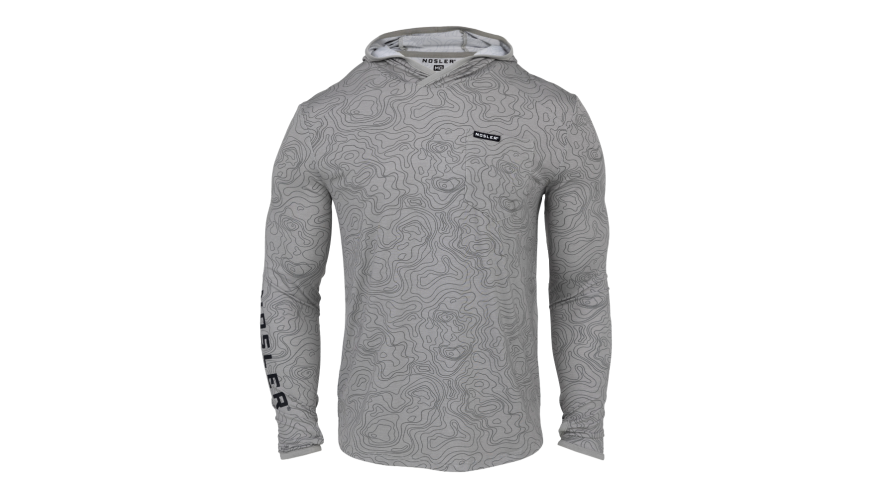
TL;DR: A bamboo hoodie earns its price if you have sensitive skin, eczema, or want a lightweight layer that reads cool against the arm. It doesn’t earn it for heavy-duty use or high-sweat activity. And over 95% of what gets sold as “bamboo” is bamboo viscose, which is chemically manufactured rayon. That changes how it wears, how long it lasts, and what “sustainable” actually means.
1. The “Bamboo” Label Is Doing a Lot of Heavy Lifting
Bamboo viscose is a regenerated cellulose fiber made by dissolving bamboo pulp in a chemical bath. Physically and chemically, it behaves like rayon. Not like raw bamboo.
The FTC takes this seriously. In 2022 the agency hit Kohl’s and Walmart with a combined $5.5 million in penalties for calling rayon products “bamboo.” The rule is that these garments have to be labeled as “rayon (or viscose) made from bamboo,” which almost nobody does on the hangtag itself.
Over 95% of bamboo apparel goes through the viscose process. The chemical bath strips out the plant’s original biology, which means the “bamboo kun” antimicrobial story you see in marketing copy doesn’t survive into the finished sweatshirt. Mechanical bamboo linen — the version that keeps some of the plant’s structure — is under 2% of the market. You will basically never see it in a hoodie.
| Fabric Type | Processing Method | Chemical Input | Retail Cost | Skin Feel |
|---|---|---|---|---|
| Bamboo Viscose (Rayon) | Chemical, open-loop | Carbon disulfide, sodium hydroxide | Medium to high | Silky, buttery |
| Bamboo Lyocell | Chemical, closed-loop | NMMO solvent | High | Smooth, slight structure |
| Bamboo Linen | Mechanical | Minimal | Very high | Coarse, hemp-like |
2. What a Bamboo Hoodie Actually Feels Like
The signature buttery softness comes from the extrusion process. Not the plant. Regenerated fibers come out perfectly round and uniform, which is why they slide against skin the way silk does.
Most lightweight bamboo hoodies land somewhere between 180 and 280 GSM. That’s a drapey weight. It flows rather than holds a shape, which is why bamboo hoodies rarely have that structured, boxy silhouette you get from a heavy cotton fleece. Heavier bamboo hoodies exist above 300 GSM, but the fabric fights the format — viscose doesn’t want to be rigid.
Which is why almost nobody sells a true 100% bamboo hoodie. The industry standard is 95% bamboo viscose with 5% elastane, which keeps the piece from bagging out at the elbows after three wears. Some brands push a 68/28/4 bamboo-cotton-elastane blend for extra abrasion resistance. That helps the shoulder seams and cuffs, but it dilutes the feel that people are buying the hoodie for in the first place. Pick your compromise.
3. Temperature Regulation — Real Effect or Marketing
Bamboo viscose pulls liquid sweat off the skin fast. Moisture regain sits in the 13-15% range, which is high.
Here’s the thing the marketing copy usually skips. Bamboo viscose manages liquid, not vapor. Merino wool absorbs moisture as vapor deep in the fiber and keeps its surface feeling dry. Viscose grabs surface liquid and holds onto it. Meaning: sweat hard in a bamboo hoodie and you end up wearing a damp towel.
For dry heat and low-output wear, it’s genuinely excellent. Thermal conductivity is high, so the fabric pulls heat off the body at contact. That’s where the “cool to the touch” moment comes from when you first pull it on.
| Fiber | Moisture Regain | Vapor Management | Thermal Conductivity | Best Use |
|---|---|---|---|---|
| Bamboo Viscose | 13-15% | Poor | High | Lounge, dry heat |
| Merino Wool | Up to 35% | Excellent | Low | Activewear, cold |
| Cotton | 7-8% | Moderate | Moderate | Casual, structured |
| Modal | 11-12% | Moderate | High | Sleepwear |
4. Durability After 50 Washes
This is where bamboo hoodies quietly disappoint people, and it’s not the fiber’s fault so much as how everyone treats them.
Wet viscose loses up to 42% of its tensile strength. That’s a big number, and it means the moment your hoodie is saturated in the wash, it’s structurally at its weakest. Add heat, add agitation above 500 RPM, and you get fibrillation — the microscopic splintering that shows up a month later as visible pilling under the arms and around the cuffs. Reddit’s r/BuyItForLife has years of complaints from people who ran a 100% bamboo piece through a normal wash cycle and watched it turn into a fuzzball. They aren’t wrong. They just weren’t warned.
A 300 GSM bamboo hoodie can shrink 5-7% if you dry it on standard heat.
To get anywhere near 50 washes without visible degradation, you’re washing cold (below 30°C), using a low-pH detergent, and drying flat. That’s not what most buyers do. It’s not what the hangtag really tells you to do either.
5. The Sustainability Claim, Under a Microscope
Bamboo farming is genuinely low-impact. The plant grows fast, doesn’t need pesticides, and regenerates from its own root system. Great on paper.
Then it hits the mill.
Turning stalks into soft viscose requires carbon disulfide and sodium hydroxide. CS2 is a neurotoxin. In open-loop facilities — which is most generic bamboo viscose production, especially the cheap end — those chemicals don’t stay in the plant. They vent into local air and waterways. This is the part of the story that “eco” hangtags leave out, and it’s the part I’d want anyone spending $90 on a hoodie to know.
If you actually care about the supply chain, check the brand against the CanopyStyle Hot Button Report and look for closed-loop processing, where roughly 99% of the solvent is captured and reused. Bamboo Lyocell is the version that meets that standard by default. Everything else is a question of who’s running the mill.
6. For Sensitive Skin and Eczema
This is where bamboo viscose has a genuine, measurable win.
The extruded fibers are perfectly round and smooth. That geometry creates less micro-abrasion against compromised skin than cotton or wool, both of which have irregular fiber surfaces that catch on inflamed tissue. For someone with atopic dermatitis, that difference is not subtle.
Fabric chemistry matters too. Residual sodium hydroxide from processing can raise the pH of the finished fabric, and that alone is enough to set off contact dermatitis in reactive skin. Which is why OEKO-TEX Standard 100 certification isn’t optional if you’re buying for eczema — it’s the only independent verification that the finished garment has been tested for residual NaOH, formaldehyde resins, and heavy-metal dye byproducts. Without it, a chemically processed bamboo hoodie is a coin flip.
7. Price Reality Check
Premium bamboo hoodies run $65 to $150. What you’re paying for is the multi-step chemical regeneration, the brand positioning, and the eco-marketing. Not the raw material — bamboo pulp is cheap.
Current benchmarks:
- Budget/mid-tier: Cariloha Long Sleeve Crossover Hoodie at $67. Free Fly Bamboo Lightweight Hoodie, $68 to $74.
- Premium: Boody Weekend Zip-up, $89.95.
- Luxury: Cozy Earth Brushed Bamboo Hoodie, $98 to $148 depending on colorway and season.
Equivalent Tencel (lyocell) hoodies from brands leaning into closed-loop sustainability land at the same price points, sometimes higher. If the eco-premium bothers you and you don’t need the drape, a heavyweight organic cotton hoodie gives you better long-term abrasion resistance for $20 to $40 less. That’s the trade.
8. When It’s Worth It, and When It Isn’t
Bamboo viscose hoodies live in a narrow niche. Indoors, dry heat, against bare skin — they’re excellent. Under abrasion or high-output sweating, they’re the wrong tool.
| Buy It If | Skip It If |
|---|---|
| You have eczema, psoriasis, or sensitive skin | You need a heavy-duty outer layer for outdoor work |
| You want silky drape and softness at any cost | You’re running or hiking in it |
| You live somewhere dry and warm | You wash on hot, heavy-duty cycles |
| You want a light layer for over-air-conditioned offices | You want verified closed-loop processing (get Tencel) |
FAQ
Is bamboo viscose the same as rayon?
Yes. Regenerated cellulose, same process, same behavior. The plant source is the only real difference.
Do bamboo hoodies shrink in the wash?
Yes, and more than most buyers expect. A 100% bamboo viscose hoodie can shrink 5-7% in hot water or on high-heat tumble dry. Blends with elastane shrink a little less because the elastane holds shape, but you still can’t shortcut the care instructions. Cold water, low-pH detergent, dry flat. Do that and shrinkage stays in a range you won’t notice on the body. Skip it once and the sleeves will tell on you.
Are bamboo hoodies actually more sustainable than cotton?
The farming is. The processing usually isn’t. Generic open-loop bamboo viscose is arguably less sustainable than certified organic cotton once you account for the CS2 and NaOH emissions. Closed-loop lyocell is a different conversation.
How long should a bamboo hoodie last?
Depends entirely on how you wash it.