
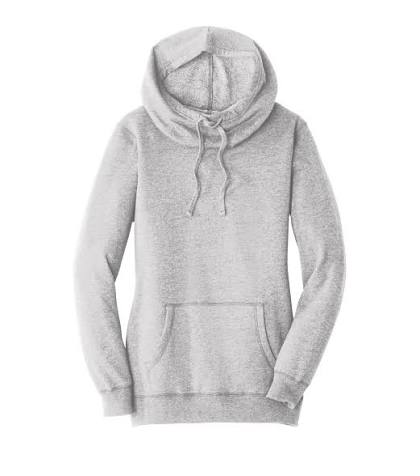
TL;DR: Wash fleece hoodies inside-out in cold water on a gentle cycle with a half-dose of liquid detergent. Skip fabric softener. Either lay it flat to dry or tumble on the lowest heat with no dryer sheets. Heat and friction are what kill fleece, and avoiding both adds years to the garment.
Why Fleece Needs a Different Playbook Than Cotton
Polyester fleece is engineered from polyethylene terephthalate (PET), which is the same plastic family your water bottles come from. The warmth doesn’t come from the yarn itself. It comes from the finishing step, where the surface gets brushed to raise thousands of tiny fiber loops, called the pile or the loft. Those loops trap dead air. Dead air is what keeps you warm.
Cotton drinks water and shrugs off high heat. Fleece does neither. Standard polyester yarn melts somewhere around 250°C to 260°C, but structural damage starts well before that. A household dryer on high can push past 60°C without breaking a sweat, and that’s enough to soften and fuse the microscopic tips of those raised loops. Once the tips fuse, the loops can’t hold air anymore. The hoodie feels crunchy, looks flat, and stops keeping you warm. This is the failure mode most people never diagnose correctly; they blame the fabric.
Friction is the second problem, and it’s the one people underestimate. Cotton fibers break off cleanly when abraded. Polyester is stubbornly tensile. It doesn’t want to break, so instead of shedding, the broken fibers curl around each other and knot into hard little balls on the surface. Pills.
The 5-Step Wash Routine That Actually Preserves Fleece
- Turn it inside out, zip the zippers, close any Velcro. Sounds obvious. Half the pilling I see on customer returns came from unzipped teeth grinding against the fleece face for 40 minutes in the drum.
- Cold water. 30°C or below. Warm water starts the fiber-warping process even without the dryer.
- Gentle or delicates cycle. Slower spin, less agitation, fewer pills.
- Half the recommended dose of liquid detergent. Liquid dissolves in cold water. Powder often doesn’t at 30°C, and what doesn’t dissolve gets trapped inside those loft loops as an abrasive grit that keeps sanding the fabric every time you move. If you only take one thing from this list, take this one.
- Wash with like fabrics only. No denim, no hardware-heavy jackets, no terry towels. Polyester holds a static charge and it will pull lint off anything cotton in the same load. You’ll spend an hour with a lint roller and still miss half of it.
The Fabric Softener Trap
Fabric softener on fleece is the single fastest way to ruin the garment, and it’s the mistake I see most often.
Commercial softeners work by depositing cationic surfactants, mostly quaternary ammonium compounds, or “quats” (DEEDMAC is the common one), onto the fabric. Quats carry a positive charge and bind to the negatively charged fiber surface. That’s how they kill static. The trade-off is that they leave behind a waxy, water-resistant film. On fleece, that film glues the pile loops together, flattens the loft, kills breathability, and traps body oils underneath, which is how a “clean” hoodie ends up smelling worse three washes in than it did before you started softening it.
If you want something in the rinse cycle, use a quarter to a half cup of distilled white vinegar in the dispenser. The mild acetic acid strips residual detergent without coating the fibers. It doesn’t smell like anything once the load dries, despite what your grandmother told you.
Dryer or Air-Dry?
Air-dry. The honest answer is air-dry.
You can tumble fleece on low, and sometimes you have to, but air-drying keeps the loft alive noticeably longer because there’s no thermal stress and the fibers get to relax under zero tension. Lay heavier hoodies flat on a mesh rack. Don’t hang wet fleece on a wire hanger unless you want permanently deformed shoulders. Polyester is hydrophobic, so a hoodie spun on delicate will usually be dry indoors in 4 to 6 hours anyway.
There’s a cost argument too. A 2025 University of Michigan analysis pegged the lifetime savings of skipping the dryer at up to $2,100 per household, since a standard dryer pulls 500 to 1,500 watts per cycle. I mention it because people find the money angle more persuasive than the fabric one, which says something depressing about us as consumers.
If you must use the dryer: low heat or Air Fluff, 15 minutes max, two wool dryer balls tossed in with it. No dryer sheets. Dryer sheets are just fabric softener in solid form.
Killing Odor Without Killing the Fleece
Fleece is oleophilic. It grabs body oils and holds on. Bacteria, mostly the Brevibacterium family, feed on the trapped oils and produce that sour, permanent locker-room smell that regular detergent only paints over with fragrance.
For a hoodie that’s already gone sour, switch to an enzyme detergent formulated for synthetic activewear. HEX Performance and Nathan Power Wash are the two I’ve had consistent results with. They use proteases and lipases to actually digest embedded sweat proteins and oils instead of masking them. Most drugstore “sport” detergents are marketing.
Home remedy version: pre-soak in a basin of warm water with half a cup of baking soda for an hour, then wash normally. Baking soda pushes the water to roughly pH 8.3, which neutralizes acidic sweat compounds. Do not combine baking soda and vinegar in the same soak. They cancel each other out. You’d think this is obvious but I’ve been asked about it enough times that it isn’t.
De-Pilling and Loft Recovery
Most care guides stop at prevention. Fleece that’s already been abused can usually be brought partway back.
- Electric fabric shaver. The Philips 500 Series is what I reach for. It clears widespread pilling fast without gouging the base fabric, which the cheap ones will absolutely do.
- Sweater stone or Gleener. Better for isolated pill zones around the cuffs and armpits. The Gleener has interchangeable edges and gives you more control than a spinning blade.
- Disposable razor. Cheapest, riskiest. If you go this route, stretch the fabric flat first, use light strokes, and accept that you might slice a hole in a $120 hoodie to save $15 on a shaver.
For matted, crushed pile — the “dog fleece” look — lay the hoodie flat and brush against the nap with a rubber curry comb or a stiff boar-bristle brush. Short, firm strokes. A pet slicker brush works too, which is either a fun life hack or a mildly depressing comment on the overlap between grooming a golden retriever and rescuing a $90 midlayer. Whatever gets you there.
Do not steam matted fleece. Direct heat plus moisture permanently welds the plastic loops together, which is the exact failure mode you’re trying to reverse.
The Microplastic Problem
Every wash cycle sheds microscopic plastic fibers from your fleece into the wastewater stream, and eventually the ocean. This isn’t controversial anymore.
You can cut the shedding by washing the hoodie inside a Guppyfriend bag, which is a fine-mesh sack that traps broken fibers before they leave the drum. The Cora Ball is another option, a spiky ball that tumbles in the load and catches fibers. Cora’s manufacturer cites a 2020 study putting capture at 31%, but a 2021 independent test came in closer to 10%. Bags outperform balls. That’s the short version.
The most effective thing you can actually do is wash the hoodie less often. Spot-clean with a drop of dish soap and warm water. Run a full cycle every five or six wears, not every wear. Fleece doesn’t need what cotton needs.
Storing Fleece Between Seasons
Wash the hoodie before you store it. Body oils you can’t see will oxidize over the summer and set as permanent stains and permanent smells. This one bites people every single fall.
Fold loosely into a breathable cotton bag or a hard plastic bin. Skip vacuum compression bags for anything longer than about six months. Pulling the air out slams the polyester pile into a severely compressed geometry, and while cotton bounces back from that, synthetic pile held crushed for months can lose loft that doesn’t come back.
Mothballs are pointless for 100% polyester. Clothes moths only eat natural animal fibers, mostly wool and silk. If your fleece is a wool blend, toss in a cedar block.
FAQ
How often should you wash a fleece hoodie?
Every five to six wears unless it’s actually soiled. Less washing means less shedding and less pilling.
Can you put a fleece hoodie in the dryer?
Yes, on the lowest heat setting for no more than 15 minutes. High heat will fuse the pile and there’s no coming back from that.
Why does my fleece hoodie pill so much?
Friction from washing and wearing knots up loose surface fibers. Because polyester is so strong, the fibers don’t break off the way cotton does — they curl into hard little balls and stay there. Cheaper fleeces with shorter fibers pill worse than higher-grade knits like Polartec 200-series, which is one of the few times “you get what you pay for” is genuinely accurate in outerwear.
How do you make old fleece soft and fluffy again?
Shave off the pills first, then brush against the nap with a stiff boar-bristle brush or a rubber curry comb to lift the flattened loops.
Is it OK to wash fleece with other clothes?
Only with other smooth synthetics.