
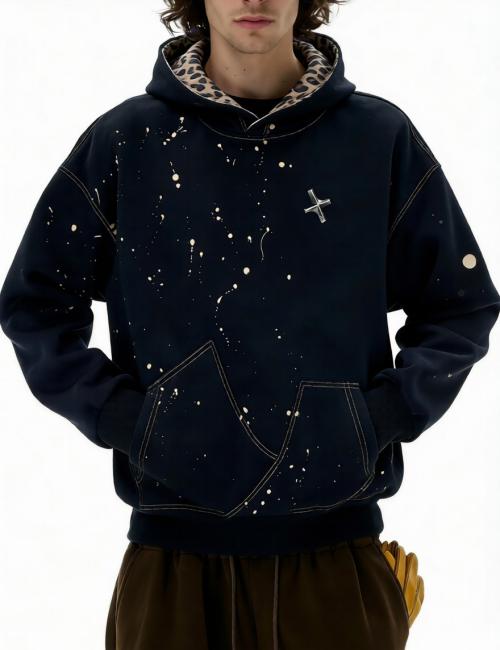
TL;DR: Launching a custom hoodie brand in Mexico is a four-step process built around USMCA duty-free trade, and it lands somewhere between $13.50 and $25.00 per unit at a 100 to 500-piece MOQ. Nearshoring cuts cross-border transit to under a week and dodges the Section 301 tariffs that still hammer Asian production.
Why Mexico Beats Cheaper Alternatives for Hoodie Brands
Mexico shipped $7.2 billion in apparel to the United States in 2024, an 11.4% jump year over year. The real advantage isn’t the sticker price, though. It’s the trade math on the back end.
Chinese goods still get slapped with Section 301 escalations, pushing effective U.S. import duties on cotton apparel into the 24% to 32.5% range. Mexican apparel comes in duty-free, assuming it clears the compliance bar (more on that in a minute).
Small runs out of Mexico usually price 10% to 18% higher FOB than the equivalent Chinese order. That gap closes fast, and then inverts, once you add tariffs and ocean freight. Asian containers take 28 to 42 days to reach the East Coast. A truck out of Puebla clears the border and hits an LA warehouse in 2 to 7 days.
| Manufacturing Origin | Avg. FOB Cost (380 GSM) | Freight & Duty to US | Estimated Lead Time | MOQ Tier |
|---|---|---|---|---|
| Mexico | $13.50 | $1.10 (0% duty) | 4–8 weeks | 100–500 |
| China | $9.50 | $4.20 (24%+ duty) | 12–16 weeks | 300–500 |
| Bangladesh | $8.20 | $3.50 (16%+ duty) | 14–18 weeks | 1,000+ |
| US Domestic | $28.00 | $0.50 (0% duty) | 3–6 weeks | 50–100 |
The USMCA “Yarn-Forward” Rule — Your Tariff-Free Ticket
This is the section founders skim past and later regret.
The yarn-forward rule says the yarn, the fabric, and the finished garment must all originate inside a USMCA country (US, Mexico, or Canada) to qualify for duty-free entry into the US. That’s it. That’s the whole trap.
The rule exists specifically to stop brands from buying cheap knitted fleece out of Shanghai, trucking it to a Puebla cut-and-sew, and stamping “Made in Mexico” on the label to claim 0% duty. If your Mexican factory imports Asian fabric for your hoodies, that shipment gets hit with standard MFN duties at the U.S. border. Every dollar you thought you saved on nearshoring? Gone, plus the goods take longer to move.
I’ve watched founders discover this at customs, which is the worst possible place to discover it.
USMCA Compliance Checklist for Apparel:
- Yarn Origin: Spun in the US, Mexico, or Canada.
- Fabric Formation: Knitted or woven inside the USMCA zone. No Vietnamese knit rolls.
- Assembly: Cut and sewn in Mexico.
- Exceptions (TPL): Tariff Preference Levels allow a limited quota of non-originating fabric to slip through duty-free. Getting on that quota is a paperwork nightmare and rarely worth chasing unless you’re running serious volume.
- Documentation: A Certificate of Origin, provided by the factory, attached to the invoice. If they hesitate when you ask for it, that tells you something.
Ask for the yarn origin before you sign anything. Not the fabric origin. The yarn.
Mapping Mexico’s Hoodie Manufacturing Hubs
Five clusters handle about 75% of Mexico’s apparel export volume. Pick the wrong one and you’ll end up paying premium rates for capabilities the factory doesn’t specialize in.
- Puebla / Tlaxcala: Historically the denim and knit belt. Facilities like AML Textil sit here, often working in sweatshirts, outerwear, and recycled fibers. Best fit for heavyweight fleece.
- Guanajuato / Aguascalientes (the Bajío): Where the vertically integrated mills live. Spinning, dyeing, and knitting under one roof. Made for scale.
- Torreón (La Laguna): Big IMMEX plants, Grupo Denim being the obvious example. Minimums often start at 1,000 units. Not a startup zone.
- Yucatán (Mérida): The newer nearshoring hub. Some Mérida factories will take 100-unit minimums if you’re willing to work with stock 180 GSM jersey or standard fleece.
- Baja California (Tijuana / Mexicali): Right on the California line. Fast-fashion cut-and-sew and POD fulfillment dominate here because border access is basically instant.
If you don’t know which region fits, ask three factories in three different clusters to quote the same tech pack. The pricing spread will tell you what each region is actually built for.
Choosing Your Production Model (POD vs. Small-Batch vs. Cut-and-Sew)
Your capital picks your path. Not the other way around.
Print-on-Demand (Budget: <$2,000). Testing designs without holding inventory. Printful runs a Mexican fulfillment center that delivers domestically in 2 to 5 days. Printify and Merchfy use Mexican print partners for the same reason: skip the customs line entirely. Margins are ugly at this tier, but the risk is close to zero.
Small-Batch Manufacturing (Budget: $5,000 – $15,000). Boutique factories in Puebla and Mérida will take 100 to 300 units per style. Expect a 10% to 18% unit premium because the factory has to eat the cost of short fabric rolls. Custom dyeing basically doesn’t exist here. You’ll pick from whatever colors the mill has on the floor that month.
Cut-and-Sew Scale (Budget: $25,000+). IMMEX plants at scale need 1,000 to 2,500 units per order. Cross that threshold and you unlock custom Pantone dyeing, custom GSM specs, dedicated production lines, and 30-day terms instead of 50% upfront. This is where the margins finally start to look like a real business.
The mistake I see most: founders with $8,000 trying to force a cut-and-sew relationship. The factory will take the money and put you at the back of the queue.
Real Cost Breakdown Per Hoodie
Custom hoodies out of Mexico land between $13.50 and $25.00 per unit at a 300 to 500 MOQ, driven mostly by fabric weight and finishing. Export-zone wages ran roughly $3.40/hour in 2024, which keeps assembly competitive without being a race-to-the-bottom situation.
Two example builds, both landed to LA:
Budget Tier (280 GSM Cotton/Poly Blend)
- Fabric (approx. 2.5 yards): $5.50
- Cut & sew: $4.00
- Screen print, 1 color: $1.20
- Trims & labels: $1.00
- FOB Mexico: $11.70
- Freight to LA: $1.00
- Landed: $12.70
Premium Tier (380+ GSM 100% Cotton French Terry)
- Fabric: $8.50
- Cut & sew (reinforced seams): $5.50
- Custom embroidery / wash: $3.00
- Trims, custom aglets, woven label: $1.80
- FOB Mexico: $18.80
- Freight to LA: $1.20
- Landed: $20.00
Fabric drives everything. 280 GSM keeps wholesale pricing tight, 450 GSM pushes FOB past $20 quickly. Fabric alone is roughly 40% of your unit cost, which is why the yarn-forward conversation matters so much. That single input decides both your duty rate and your margin.
Sourcing Fabric — What’s Actually Made in Mexico
Streetwear people argue about brushed fleece vs. French terry constantly. High-end brands tend to skip poly-heavy brushed fleece because it pills faster and traps smell, and go for 100% cotton French terry for the structure.
Here’s the problem. True heavyweight 100% cotton French terry (400+ GSM), spun entirely inside Mexico, is genuinely hard to source. Most Mexican mills bring in raw cotton and yarn from abroad. If the mill knits 450 GSM fleece on Chinese or Indian yarn, your hoodie doesn’t qualify for USMCA zero-tariff entry no matter how many times “Hecho en México” appears on the label.
The r/streetwearstartup threads are full of founders posting screenshots of unexpected duty bills. Same story every time: they assumed “Made in Mexico” meant duty-free, nobody asked about the yarn, customs disagreed.
Ask for the fabric spec sheet. GSM plus country of origin for the yarn itself. In writing.
Legal Setup — Trademark, Tax ID, and Selling Rights
If you’re a US brand exporting from Mexico, you don’t need a Mexican corporate entity. Your factory operates under IMMEX, which lets them temporarily import raw materials (zippers, polybags, that stuff) tax-free as long as the finished product leaves the country.
Selling B2C inside Mexico is a different animal. You’ll need an RFC (local tax ID) and you’ll owe 16% IVA on domestic sales.
Trademark is where founders get sloppy. Registering your brand with IMPI blocks local manufacturers or opportunists from squatting on your name. The IMPI application runs around $3,126 MXN (roughly $185 USD) and takes 4 to 6 months to process. Anecdotally, a meaningful chunk of applications get rejected on prior-similarity grounds, so a preliminary search before you file is basically mandatory. Don’t skip it because it feels like a formality.
Your 90-Day Launch Timeline
Mexican production runs tighter than Asia, but sampling still takes what it takes. Samples typically cost $50 to $150 depending on complexity.
- Weeks 1-2 (Tech Packs): Lock down patterns, GSM, hardware (aglets, zippers, drawcord tips), submit tech packs in English and Spanish. Bilingual specs prevent about 80% of the “wait, that’s not what I meant” moments.
- Weeks 3-5 (Sampling): Factory sources stock fabric and cuts the first sample. 14 to 21 days is normal.
- Weeks 6-7 (Revisions): Fit checks and pattern tweaks.
- Weeks 8-11 (Bulk Production): Deposit clears, cut-and-sew runs 4 to 8 weeks depending on the queue.
- Weeks 12-13 (QC and Freight): Final inspection, then 2 to 7 days of cross-border trucking to Laredo or straight to LA.
Add a week if you’re going through Christmas or Semana Santa. Everything stops.
FAQ
What’s the minimum order quantity for custom hoodies from Mexican manufacturers?
MOQs typically run 100 to 500 units per style at boutique factories in Mérida or Puebla. Scaled IMMEX plants in Torreón need 1,000 to 2,500 per order before they’ll open custom dyeing and dedicated lines.
Are Mexico-made hoodies really tariff-free when imported to the US?
Only if they strictly comply with USMCA yarn-forward. Yarn spun in North America, fabric knitted in North America, assembly in Mexico. Chinese yarn breaks the chain and standard tariffs apply. This is the single most important thing to verify before you cut a purchase order, and it’s the thing founders most commonly get wrong. Ask the factory to send you a Certificate of Origin template before you ever place a deposit. If they can’t produce one, or they get evasive about yarn sourcing, walk away. It’s cheaper to lose a week finding a new factory than to lose 24% at the border.
How much does it cost to manufacture a custom hoodie in Mexico?
Between $13.50 and $25.00 FOB per unit. Budget 280 GSM cotton-poly at the low end, premium 400+ GSM French terry with embroidery at the top.
Do I need to live in or visit Mexico to start a hoodie brand there?
No.
Most of it happens over WhatsApp and DHL. That said, visiting Puebla or León once before you commit to bulk saves real money, especially on fabric hand-feel calls that don’t translate over video.