
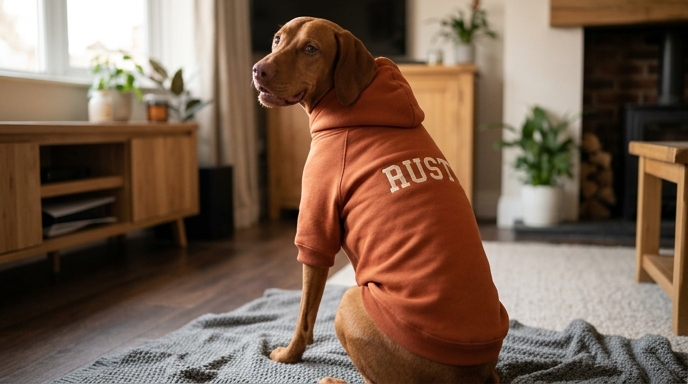
TL;DR: A named dog hoodie is one of the better pet gifts under $50 because it hits three things at once: personalization, actual use, and photos. It works best on short-coated breeds, and you have to size by chest girth, not weight. Skip indoor wear for thick-coated dogs and anything brachycephalic.
The Emotional Math Behind Personalized Pet Gifts
Dog owners treat their pets as family, and the spending shows it. The American Pet Products Association put total U.S. pet industry spending at $147 billion in 2023, with a heavy skew toward humanized products. A gift with the dog’s actual name on it triggers the same recognition response as a personalized baby gift. A generic “Dog Mom” slogan doesn’t.
There’s a quieter reason personalized apparel sticks: most sellers won’t take it back. The recipient has to keep it, which (eventually) means they use it, which means photos, which means the gifter sees it on Instagram six months later and feels good about the purchase. The whole category runs on that loop.
What Makes a Named Hoodie Beat Other Personalized Options
Compared to other custom pet gifts, hoodies win on daily utility and visual real estate. Engraved metal tags scratch up and go unreadable within months. Custom bandanas bunch around the collar and need constant fiddling for photos. Personalized ceramic bowls stay on the kitchen floor where nobody sees them.
A named hoodie puts the customization on the dog’s back or chest, which is the biggest visible surface in any photo.
| Gift Type | Average Cost | Daily Use Frequency | Photo Shareability |
|---|---|---|---|
| Named Hoodie | $25 – $55 | High (Winter/Fall) | High (Highly visible) |
| Engraved Tag | $15 – $30 | Constant | Low (Too small to read) |
| Custom Bandana | $15 – $25 | Medium | Medium (Often bunches up) |
| Name Bowl | $30 – $60 | High | Low (Stays in kitchen) |
Owners on r/dogs regularly complain that bandanas get chewed or soiled fast, while a fitted hoodie stays put against the body.
Sizing by Body Shape, Not Just Weight
Measure chest girth first, back length second. Chest is the fail point. Weight is a useless metric for dog apparel, full stop. A 30-pound Frenchie and a 30-pound Whippet need completely different garment shapes, and if you’ve ever tried to zip a hoodie across a Frenchie’s ribcage because the chart said “medium = 25-35 lbs,” you already know this.
Breeds cluster into shapes that dictate fit:
- Barrel-chested (French Bulldogs, Pugs, English Bulldogs): Need 2 to 3 extra inches of chest girth over a standard breed of the same back length. Size by their back length and the hoodie will not go on.
- Deep-chested (Greyhounds, Dobermans, Poodles): Huge chest, narrow waist and neck. Standard hoodies hang loose at the midsection and let cold air draft up along the belly.
- Long-torso (Dachshunds, Corgis): A standard hoodie fits like a crop-top. Dachshunds often want 14 to 16 inches of back length even with a tiny chest girth.
- Standard (Labs, Goldens): Usually fit true to size, with chest and back length scaling together like the chart promises.
To measure a dog in sixty seconds, use a soft tape. Wrap it around the widest part of the ribcage, right behind the front legs, for the chest girth. Base of the neck to base of the tail for back length. Size up if the dog is between numbers. Returns on custom items are essentially nonexistent, so this is not a step to half-ass.
The Overheating Question — Which Dogs Shouldn’t Wear One Indoors
Dogs can overheat in hoodies once indoor temperatures climb past about 70°F (21°C), and brachycephalic breeds like Pugs and Bulldogs are the first to show it. Dogs don’t sweat across their bodies the way we do; they cool through panting and vasodilation in the ears and paws. Normal body temp runs 101 to 102.5°F. A fleece layer traps heat against the core.
Brachycephalic breeds also carry Brachycephalic Obstructive Airway Syndrome (BOAS) to varying degrees. The short snout and elongated soft palate make panting inefficient, so adding a thick hoodie indoors forces the respiratory system to work harder for the same amount of cooling. This is the actual safety issue, not an abstract one.
Red flags your dog is overheating:
- Heavy, open-mouth panting that doesn’t settle
- Dark red or purple gums and tongue
- Lethargy or refusing to stand
- Pacing, can’t settle
Double-coated breeds (Huskies, Malamutes, Goldens) should not be in fleece hoodies indoors, period. Their undercoat is already doing the insulation job. For those dogs, treat hoodies as strictly outdoor winter gear. Single-coated dogs like Pitbulls, Chihuahuas, and Greyhounds are the ones that actually benefit indoors on a cold day.
Embroidery vs. Heat Press vs. Screen Print — What Lasts
Embroidered names last the longest, surviving 50-plus washes, while heat-pressed designs usually start cracking inside 15 to 20 washes of regular use. Dog clothes get washed a lot (mud, drool, shedding, the occasional roll in something unspeakable), and the personalization method decides whether the gift lasts a season or three years.
| Method | Wash Durability | Cost Impact | Feel Against Skin |
|---|---|---|---|
| Embroidery | 50+ washes | Adds $10-$15 | Can chafe if unbacked |
| Heat Transfer Vinyl (HTV) | 15-20 washes | Adds $5-$10 | Smooth interior |
| Direct-to-Garment (DTG) | 25-30 washes | Adds $5-$10 | Softest, no texture |
Commercial embroidery uses polyester thread that holds color and doesn’t peel. The catch is the back side (the stabilizer) can irritate short-coated dogs if it sits against bare skin without a backing patch, so check for a lined panel on the inside of the chest. HTV sits on top of the fabric, and hot water or a dryer cycle degrades the adhesive until the letters start lifting at the corners. If you’re buying for a dog whose owner is realistically going to toss everything in the machine on warm, embroidery is the only option that’ll survive the year.
Choosing a Name Style That Doesn’t Age Badly
High contrast is the rule for pet apparel typography. White or neon thread on a black or navy hoodie reads from twenty feet away. Black thread on a dark grey hoodie disappears in photos, which defeats most of the point.
Skip metallic threads (gold, silver) on the inside of the collar or chest. They’re stiffer than standard polyester and chafe on thin-coated breeds like Pitbulls and Boxers.
Block letters and varsity-style fonts stay legible. Heavy script fonts turn into mush when they’re scaled down to a four-inch chest panel on a Chihuahua. And put the name on the back of the hoodie, not the chest. Chest placements vanish the second the dog is standing, walking, or sitting like a normal dog.
Timing and Ordering — Avoid the #1 Gifting Mistake
Custom embroidery usually adds 3 to 7 business days to standard production, before shipping. If you’re buying for a specific date (birthday, Gotcha Day, Christmas), that production window has to be baked into the math up front, not bolted on after you’ve picked a shipping speed.
For Q4, custom-item shipping cutoffs typically land somewhere around the second week of December in a normal year, give or take depending on the carrier and the shop’s backlog. Order on the 15th and you’re almost certainly looking at post-Christmas delivery. The standard save: print the digital mockup the seller sends you, tuck it in a card, and let the actual hoodie arrive in January. Nobody minds.
Price Benchmarks and When to Walk Away From a Deal
A decent personalized dog hoodie runs $25 to $55. Under $20 is almost always drop-shipped from overseas with the cheapest fleece the factory had on the roll that week.
Mid-weight fleece for pet apparel sits around 250 to 300 GSM (grams per square meter). Under 200 GSM is thin, floppy, and tears the first time the dog catches it on a branch.
Checklist for spotting bad listings:
- No sizing chart with actual inches or centimeters. If it’s just S/M/L with no chest girth number, close the tab.
- Only digital mockups. If every photo is a floating hoodie with a name pasted on, nobody has verified the fit on a real dog.
- 3-4 week shipping. That’s drop-shipped from overseas, which also means returns for sizing errors are not happening.
One bias I’ll own: I still steer people toward embroidery even for dogs who’ll outgrow the hoodie in six months, which is objectively overkill. HTV would be fine for a puppy. Old shop habit, hard to shake.
FAQ
Are hoodies safe for dogs to wear?
Yes, outdoors in cold weather, with a correct fit around the chest and neck. Pull it off indoors once the room is over about 70°F, especially for double-coated or brachycephalic breeds.
What size hoodie should I get for my dog?
Measure chest girth at the widest part of the ribcage, then back length from the base of the neck to the base of the tail. Prioritize chest girth over back length, and ignore the weight ranges on the chart almost entirely. Weight tells you nothing about shape, and shape is what’s going to make or break the fit, particularly on barrel-chested or deep-chested breeds where the chest number is doing all the real work. If your dog measures between two sizes, go up.
Can I get a hoodie with my dog’s name delivered in under a week?
Rare. Personalization adds 3 to 7 business days before anything ships. Standard shipping on top of that puts you around 10 to 14 days door to door.
What’s the best way to wash a personalized dog hoodie without ruining the name?
Inside out, cold, gentle cycle, air dry flat. Heat is what kills HTV adhesive and shrinks cotton-blend fleece.