Blog

Your best place for Startups & Established Brands to customize hoodies.

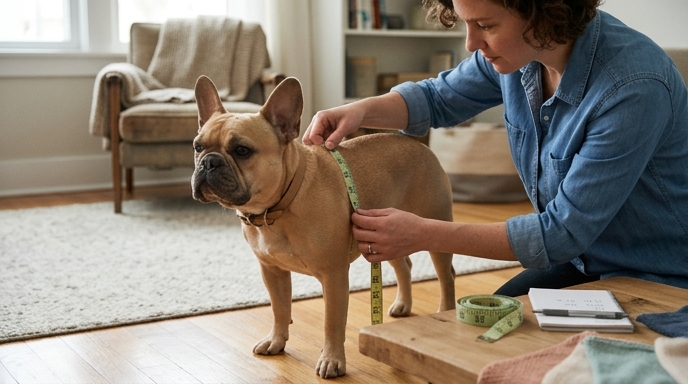
How to Measure Your Frenchie for a Custom Hoodie

How to Measure Your Frenchie for a Custom Hoodie

To measure a French Bulldog for a custom hoodie, you need four numbers off a soft tape: chest girth at the widest point behind the front legs, neck circumference at the collar line, back length from base of neck to tail base, and shoulder-to-shoulder width. When you land between sizes, round up. Why Frenchies Break Standard Dog Sizing Charts French Bulldogs don’t fit generic small-breed sizing charts, and the math is pretty simple once you see it. The AKC breed standard caps Frenchie weight at 28 pounds, which drops them into the “small dog” bucket on most charts. But their bone density and barrel chest produce a silhouette nothing like a 20-pound Boston Terrier or a Jack Russell at the same weight. Here’s where it falls apart. A standard small-breed hoodie built for a 20-pound dog usually accommodates a 17 to 19-inch chest. A 20-pound Frenchie frequently measures 22 inches around. So if you buy the generic size that actually fits their chest, the back length ends up around 16 inches or more, draping over the tail and getting in the way of the back legs. Fit problems account for the majority of pet apparel returns (I’ve seen numbers north

Read More »
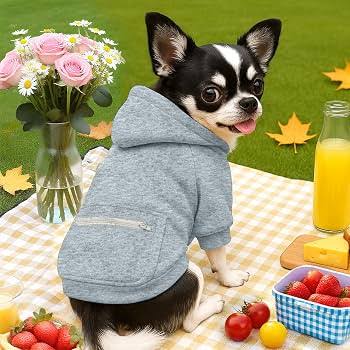
Funny vs Cute: Which Custom Dog Hoodie Style Sells More?

Funny vs Cute: Which Custom Dog Hoodie Style Sells More?

TL;DR: Funny dog hoodies tend to win on TikTok and during Q4 holiday gifting volume. Cute dog hoodies tend to win on Instagram and drive higher repeat purchases. Your primary marketing channel is usually the deciding factor. POD margins are similar on paper for both styles, with base costs around $14.09 for the standard pet hoodie blank and $21.50 for the all-over print option. The Two Buyer Personas Behind Every Dog Hoodie Sale Dog hoodie buyers fall into two camps: gift-givers and identity-expressers. How you split your catalog between them shapes everything downstream, from pricing to which mockups you bother shooting. Gift-givers buy funny hoodies. They want a quick laugh at a white-elephant party or a birthday thing. The purchase is about external validation and a joke that lands. Identity-expressers buy cute. They see their pet as a child, and the hoodie is part of the household aesthetic. The APPA pegged total US pet spend at $147 billion in 2024, and non-essential accessories and clothing are a meaningful slice of that. Persona Trait Gift-Giver (Funny) Identity-Expresser (Cute) Primary Motivation Humor, novelty, event-based Affection, daily wear, photo-ops Price Sensitivity High (wants a cheap laugh) Low (willing to pay for premium/custom) Purchase

Read More »
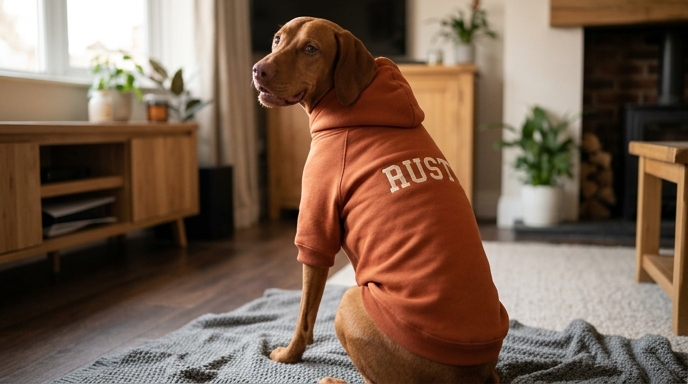
Why Named Dog Hoodies Are the #1 Pet Gift

Why Named Dog Hoodies Are the #1 Pet Gift

TL;DR: A named dog hoodie is one of the better pet gifts under $50 because it hits three things at once: personalization, actual use, and photos. It works best on short-coated breeds, and you have to size by chest girth, not weight. Skip indoor wear for thick-coated dogs and anything brachycephalic. The Emotional Math Behind Personalized Pet Gifts Dog owners treat their pets as family, and the spending shows it. The American Pet Products Association put total U.S. pet industry spending at $147 billion in 2023, with a heavy skew toward humanized products. A gift with the dog’s actual name on it triggers the same recognition response as a personalized baby gift. A generic “Dog Mom” slogan doesn’t. There’s a quieter reason personalized apparel sticks: most sellers won’t take it back. The recipient has to keep it, which (eventually) means they use it, which means photos, which means the gifter sees it on Instagram six months later and feels good about the purchase. The whole category runs on that loop. What Makes a Named Hoodie Beat Other Personalized Options Compared to other custom pet gifts, hoodies win on daily utility and visual real estate. Engraved metal tags scratch up and

Read More »

How to Design the Perfect Custom Dog Hoodie in 5 Steps

Designing a custom dog hoodie comes down to five decisions: measure your dog standing square, pick fabric for the climate and the coat type, choose a cut that matches the dog’s build, plan closures and harness access, and prototype before you cut into anything you care about. The step people skip is almost always the 6-point fit test. This guide is aimed at craft-literate owners, Etsy sellers, and small pet-brand founders who want something that actually fits a real dog instead of a mythical medium Beagle. Why Off-the-Rack Fails — Mapping Your Dog’s Actual Shape Dogs are not scaled-down humans, and more importantly, most dogs are not scaled versions of each other. The pet apparel industry builds mass-market patterns around a generic medium-proportioned dog, roughly Beagle-shaped, and that assumption breaks the moment you try to dress one of the three real-world archetypes. Deep-chested breeds like Greyhounds and Dobermans have a chest-to-waist ratio that can approach 2:1. A generic hoodie that fits their 30-inch chest will hang off an 18-inch waist like a sail, funneling cold air straight down the belly. Long-backed breeds — Dachshunds, Corgis — need back length extensions in the 20-30% range over standard patterns. Stocky-square breeds like

Read More »
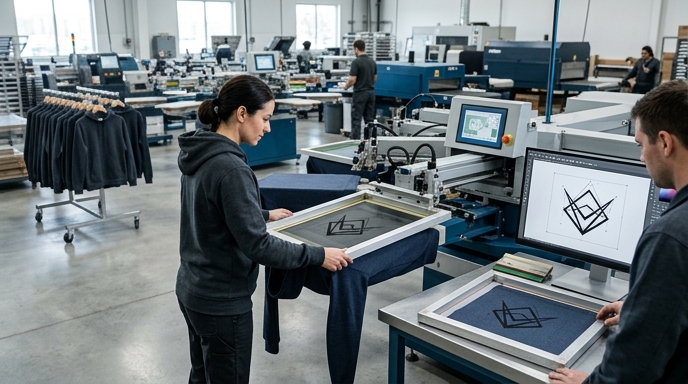
How to Vectorize a Logo for Hoodie Printing

How to Vectorize a Logo for Hoodie Printing

TL;DR: Vectorizing a logo for hoodie printing means converting a pixel-based image (PNG/JPG) into a scalable vector file (AI, EPS, or SVG) that printers can resize and color-separate without quality loss. Use Adobe Illustrator’s Image Trace for simple logos or redraw complex ones manually, then outline fonts, expand strokes, and set spot colors before export. Why hoodie printers reject your logo file Hoodie printers reject logo files for five main reasons: low resolution, missing spot colors, live text, hidden layers, and the wrong color mode. A 72 DPI logo pulled off Instagram turns into a jagged mess when you blow it up to 12 inches across a hoodie chest. Printers need clean math-based lines to burn screens or program embroidery machines, and a web-grade raster doesn’t give them that. Sending a bad file costs you time and money. Shops routinely tack on art fees in the $25 to $50 per hour range to clean up what customers send in. And if your design still has live text (fonts not converted to shapes), the printer’s machine will substitute a default font the moment the file opens on their end. White backgrounds get mistaken for white ink more often than you’d think,

Read More »

Get Hoodie Quote

Tell us your needs — get quote & lead time.